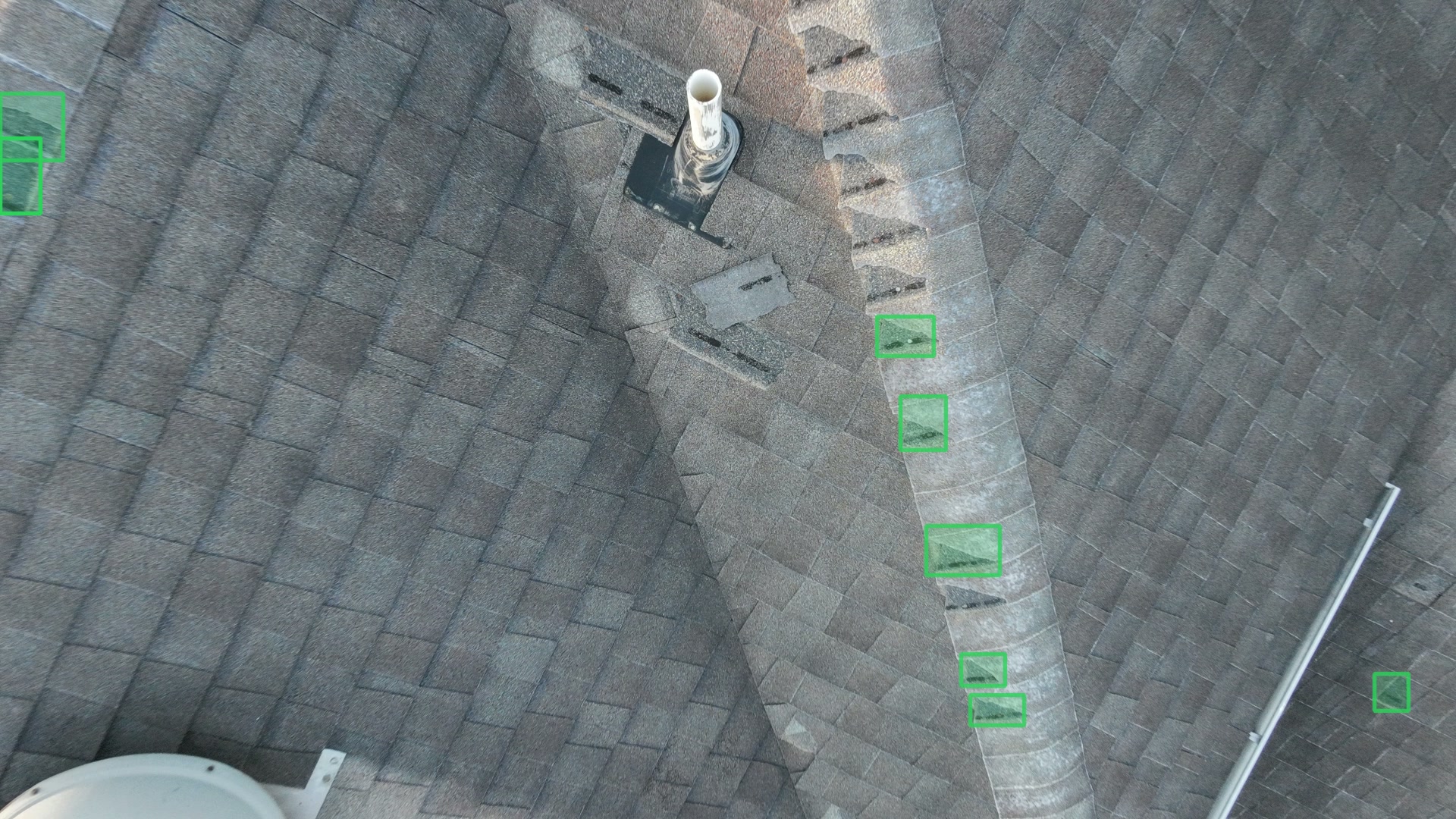
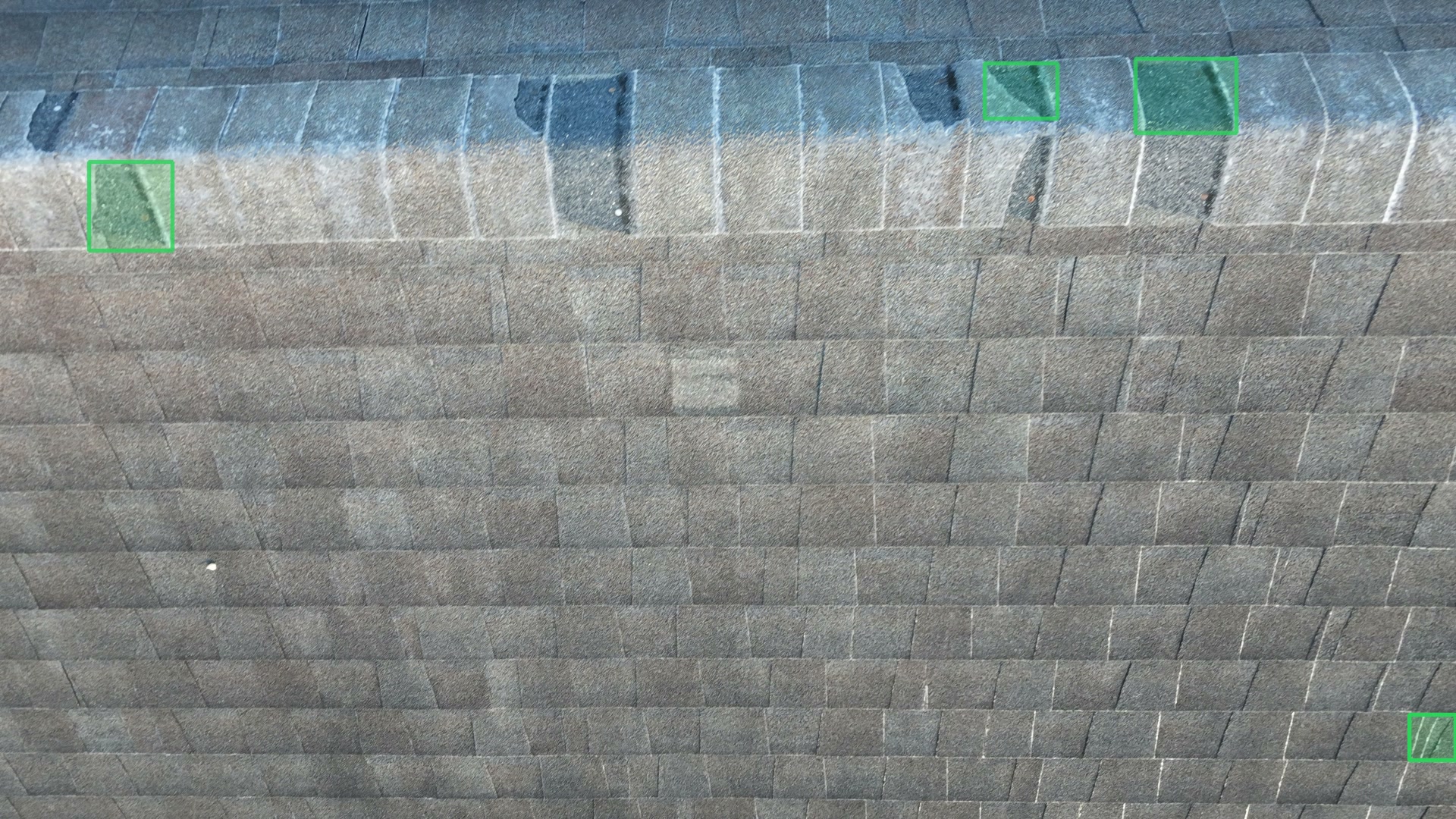
Whose roof is this? It could be yours. From the street it looks fine. The gutters are clean, the shingles are the right color, nothing is hanging off. And on one ten-minute drone flight over it last week, our system flagged over thirty missing or damaged shingle tabs.
Every one of them was somewhere you cannot see from the ground: along the hips, up near the ridge, on the slope that faces away from the driveway. The owner had no idea.
Your insurer is going to look
This is the part most homeowners don't know until it costs them. The Texas Department of Insurance says it directly: when you apply for a homeowners policy, your insurance company will inspect your roof. Based on what they see, they may charge you more, or refuse to insure you at all.
That inspection is not a courtesy. It is underwriting. The insurer is deciding whether your roof is a risk they want, and a roof with thirty open tabs on the back slope is a roof that leaks the next time it rains hard. If they find it before you do, the conversation starts with a higher premium or a decline letter.
Most people have never seen their own roof
Think about it. You see the front slope from the street, at an angle, from forty feet away. You have never seen the back. You have never seen the ridge from above. Unless you have been up a ladder with a reason to look, the condition of your roof is a guess.
Wind damage is built for that blind spot. A gust lifts the edge of a tab. The seal breaks. The tab creases, flexes through a few more storms, and tears off. What is left is a gap the size of a hand, in a color that reads as shadow from any angle a person can reach.
What the state recommends
The same TDI guidance that warns you about the inspection also tells you how to stay ahead of it. Paraphrased, their checklist is:
- Trim back tree limbs that hang over or near the roof.
- After a storm, check for missing or damaged shingles.
- Check the chimney for loose bricks that could fall on the roof.
- Keep gutters clean so water doesn't back up under the shingles.
- Hire a roof inspector every few years to catch problems early.
Four of those five you can do from the ground. The second one is the catch. "Check for missing shingles after a storm" assumes you can see them, and the roof in this video is the proof that you usually can't.
Look before they do
A drone flying a straight-down grid at a hundred feet photographs every course on every slope in about ten minutes. Our model reads those photos the way an adjuster does, flags each missing or damaged tab, and puts it in a report with a location and a date.
That report does two things. It tells you what to fix while it is still a shingle repair and not a decking repair. And it gives you a dated record of the roof's condition before the insurer ever sends anyone out, so you walk into underwriting knowing more about your roof than they do.
Know what's up there before your insurance company does.
Roof checklist adapted from the Texas Department of Insurance. Inspection footage is a real Lake Houston area roof; location data was removed from the images to protect the homeowner.